
The Difference Between Bespoke Joinery and Carpentry
If you're planning a renovation, you've probably seen the words joinery and carpentry used almost interchangeably. They're related crafts, but they're not the same, and knowing the difference will help you brief the right tradesperson, budget accurately and end up with the result you actually wanted.
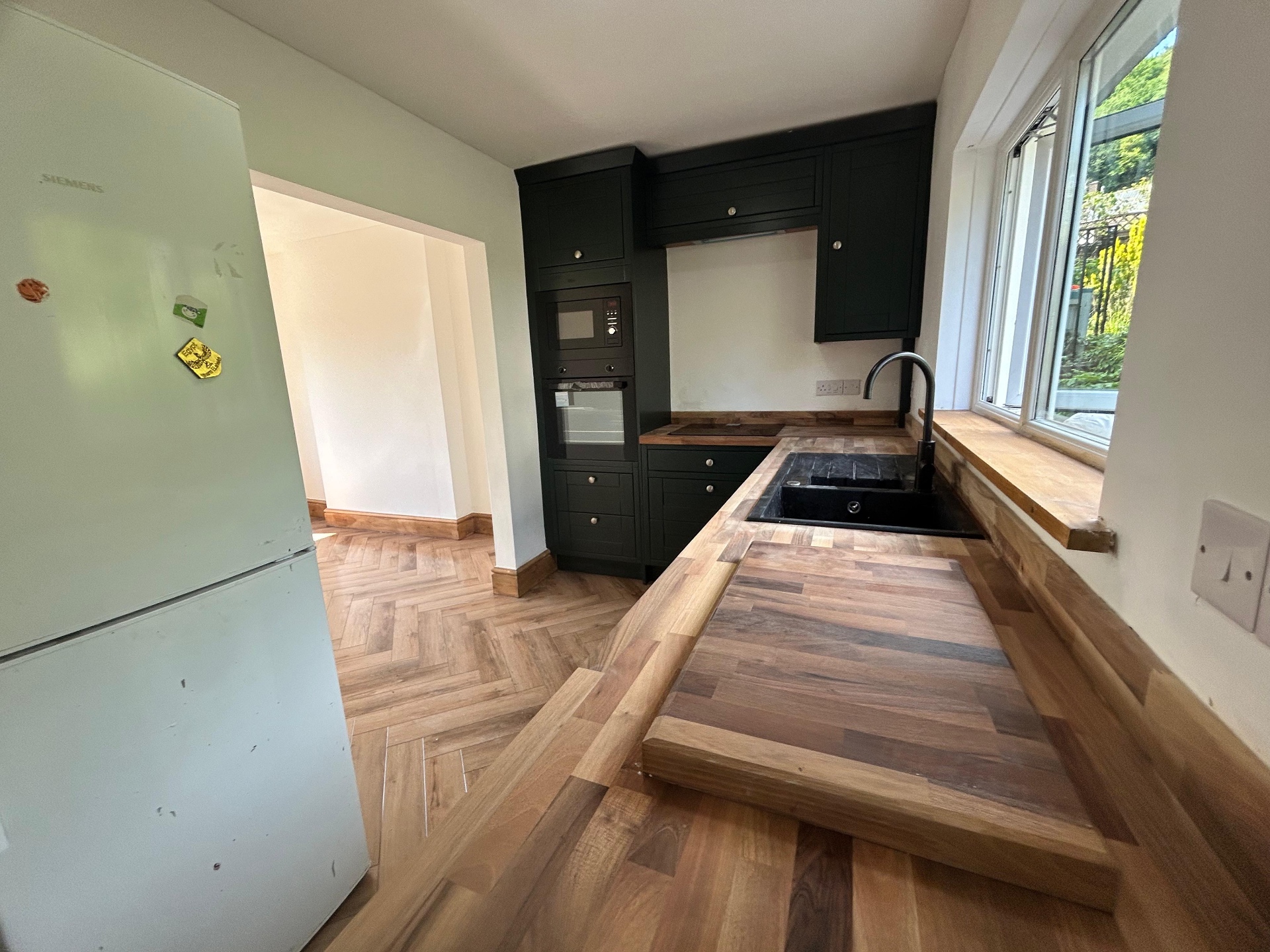
What is bespoke joinery?
Bespoke joinery is the craft of making wooden components to order in a workshop, typically with machinery, jigs and the time to get things properly square, flush and finished. A joiner cuts and joins timber into something that didn't exist before: a fitted wardrobe, a hardwood staircase, a one-off kitchen, a set of internal doors sized to an old cottage where nothing is standard.
The defining word is bespoke. You're not buying a unit off a shelf; you're commissioning something built around your home, your measurements and your taste.
What does a carpenter do?
Carpentry is timber work done on site. It splits into two stages:
- First fix is the structural work that happens before plastering: roof timbers, floor joists, stud walls, door linings, window frames. Everything that ends up hidden inside the walls.
- Second fix is the visible finishing work after the plaster is dry: hanging doors, skirting, architrave, staircases, built-in storage, fitting kitchens and worktops.
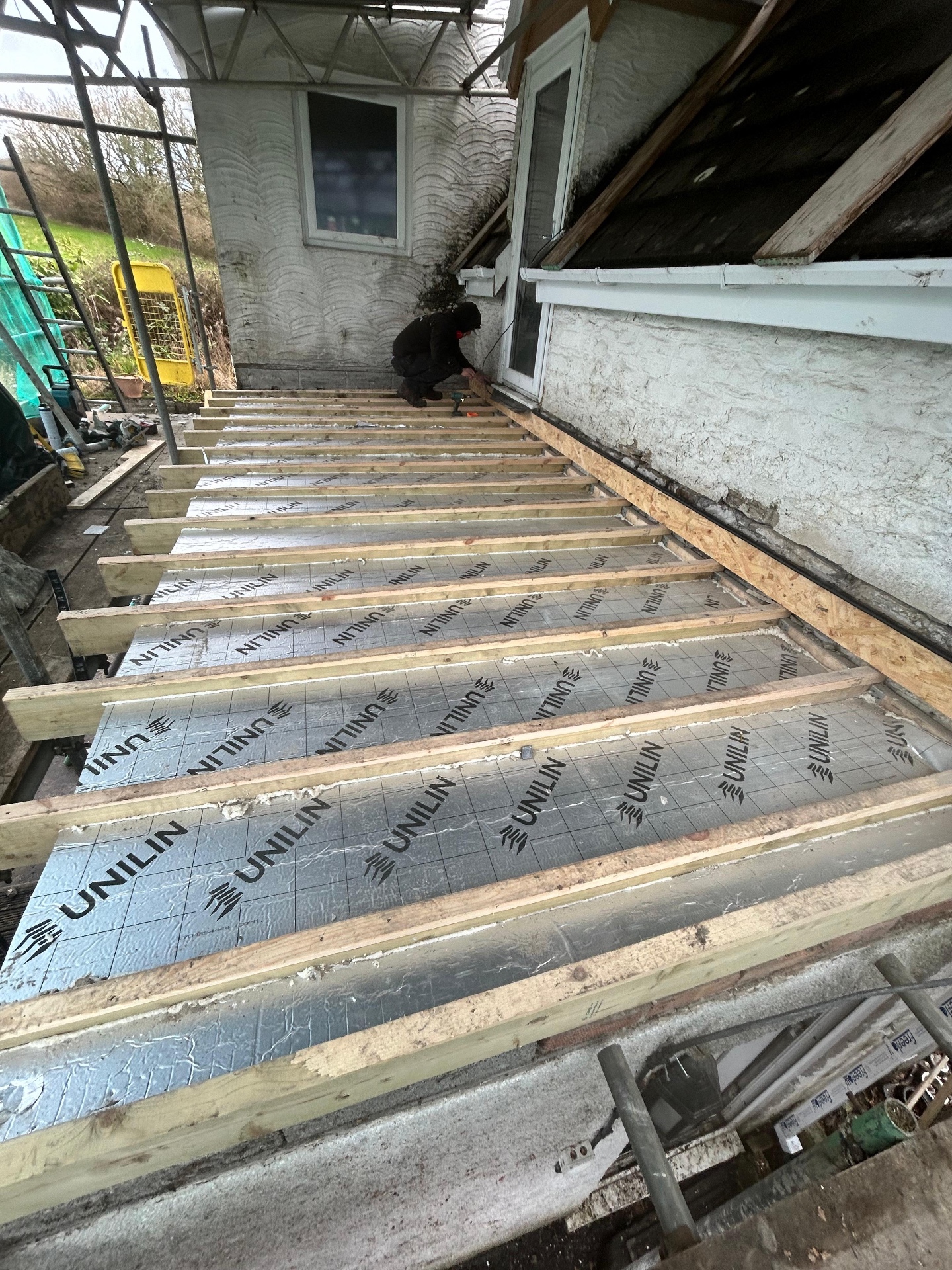
Joinery vs carpentry, side by side
| Aspect | Bespoke Joinery | Carpentry |
|---|---|---|
| Where the work happens | Workshop | On site, in the home |
| Typical output | Doors, staircases, kitchens, fitted furniture, windows | Roofs, floors, stud walls, skirting, door hanging |
| When you need it | You want something custom-made | You're building, extending or renovating |
| Buying decision | Design-led: drawings, materials, finishes | Spec-led: drawings, building regs, schedule |
Which one do you actually need?
The simplest test is what you're trying to end up with.
Choose bespoke joinery when the item itself is the point: a handmade kitchen, an alcove of shelving that fits to the millimetre, a hardwood staircase, a run of internal doors for a period property. You care about the design, the timber and the finish, and you want it built for your home rather than adapted from stock.
Choose carpentry when the work is part of a wider build: a loft conversion roof, a new extension's floor and stud walls, hanging a delivery of doors, fitting skirting and architrave across a refurbished house. The output is sound, level, plumb timber work that the rest of the trades can build on.
Most real renovations need both. A new kitchen is bespoke joinery (the units, worktop and end panels) plus second-fix carpentry (the installation, the scribing, the trims). That's why it helps to hire one team who does both. Fewer hand-offs, one person responsible from drawing to fitted result.
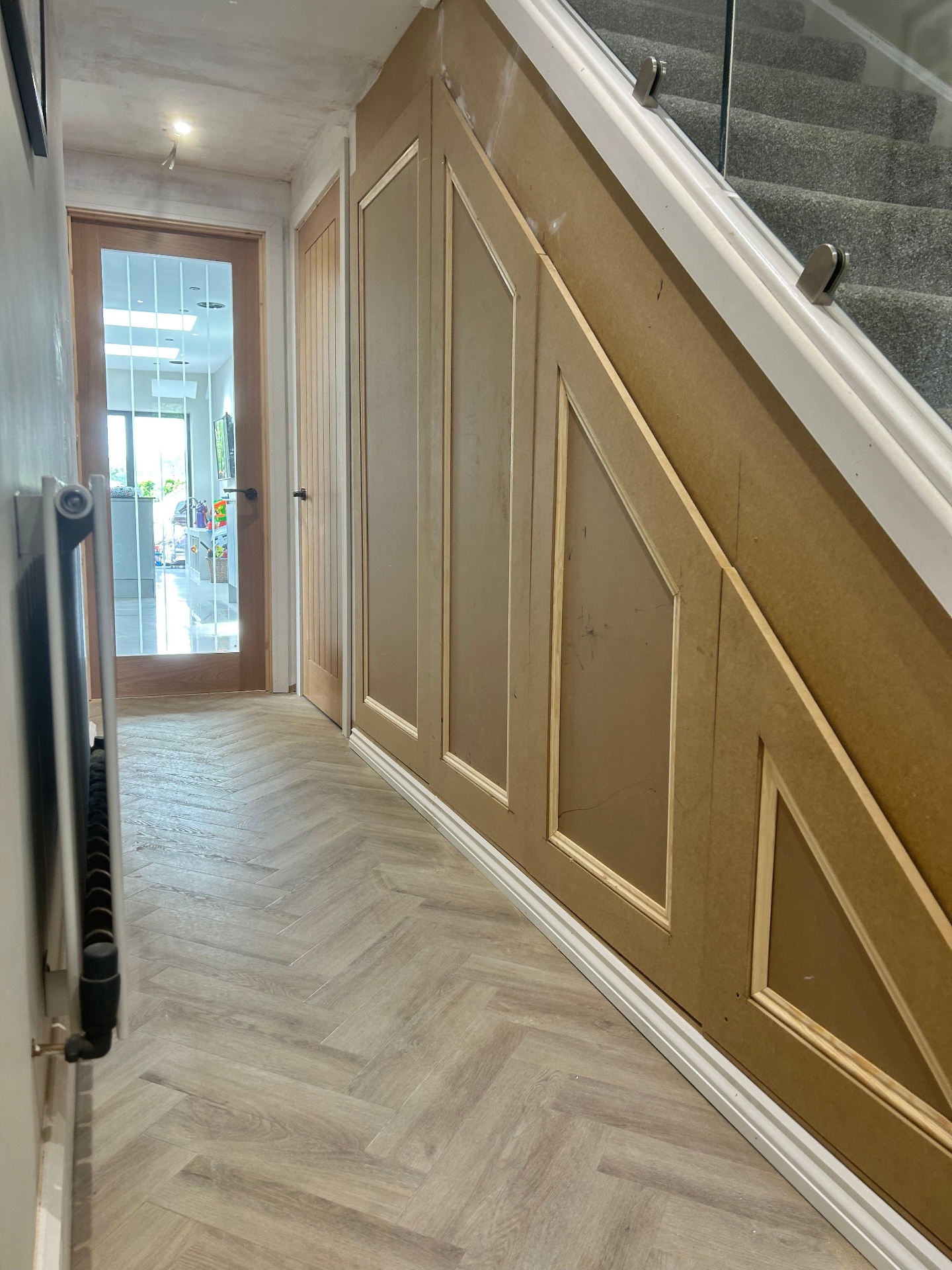
Working with Goss Carpentry
We cover both sides: bespoke joinery built in the workshop and carpentry done on site. That means one team for your kitchen, staircase, fitted storage, doors, roof or extension, and a single point of contact from first measure to final fix.